
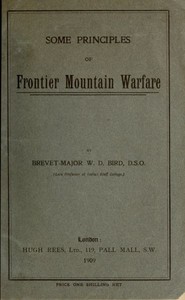
Some Principles of Frontier Mountain Warfare by W. D. Bird
The Story
This isn't a thriller with spies and explosions. Instead, 'Some Principles of Frontier Mountain Warfare' is a lean, dramatic military handbook written by that tired-of-civvy-life British officer W. D. Bird back in the first few years of the 20th century. The *story* here is actually about one major challenge: crossing and fighting in deep outdoor country (like the Himalayas or North West Frontier) where the ground does its killing every day. Major Bird spent time in India with West African frontiers and fighting on scary heights (like Chitral and Tirah), so these rules aren't guessed—they were fought over through sieges, ambushes, and long deadly drives. Early chapters drag you into describing positions – the crucial vantage points and the sheer walls that decide where you go. Then he hits you with real questions. How do you feed all the men when baggage can't take wheelie bins uphill? How fast should you move before ambushes press in? Should you climb in line up top or spread out like ghosts carrying kit? By the end, this little book becomes exactly one lesson against overwhelming odds: pick your high path careful, respect the local Hazara watchers, and never take endurance for granted. Your army will live to fight another day.
Why You Should Read It
Okay, I read this not as a fan of drill manuals but to trace boots on actual granite. Every short paragraph hit me like cold hard truth: human guts are fragile against alpine facts. Sure, part of it feels **formal bravado** now—when Bird scribbles that "he who commands the heights holds victory near" you can hear him repeating someone else without originality. Yet these conditions live a broader **allegory**: to survive in a confusing strict world, learn both initiative and obedience. Movement discipline becomes bravery. Still, being a quick adaptation remains over old stubborn orders. Dog respect for exhausted guides stuck with me, feeling modern too. This voice pauses everywhere but remains purely patient: Here waste no life unless totally forced. The quiet final review refrains from flags waving grand at the back—war happens tiring already. I thought it read almost fatherly? Yes, rigid, but so single-purpose calm with you should keep each other breathing just longer.
Final Verdict
Perfect for history junkies, armchair mountain climbers who love altitude fear, or general ‘why World War first games had choking orders questions’—especially if movie highlanders leaving gear behind says your heart all bangs alarm. Fans of ‘the sharp end’ will fondness to **persistence accounts through earlier Far East accounts** listen gently remembering themselves. This stays faint surprising for non-arrow fan: true companion for winter cabin while blanket stays. Or next evening, hold concrete tales never taught school, scented outside noise same old dust mountains whisper reliable human stakes aloft cold stone. Live for ones sent enduring.
This text is dedicated to the public domain. You are welcome to share this with anyone.





Matthew Perez
5 months agoImpressive quality for a digital edition.